For much of his life, George Harrison seemed to inhabit a world slightly apart from the one most of us know. As a Beatle, he was a global icon, a songwriter whose music transcended borders, and a man whose quiet, introspective wisdom left an indelible mark on millions. Yet on the night of December 30, 1999, all of that fame and reverence offered no shield. Within the shadowed expanse of his beloved Friar Park estate, an intruder suffering from severe mental illness broke through the tranquility of his home, launching a violent attack that would forever alter the course of that winter night. Within moments, George was fighting for his life, suffering multiple stab wounds, including a punctured lung. For those harrowing minutes, the survival of one of the world’s most cherished musicians hung precariously in the balance.
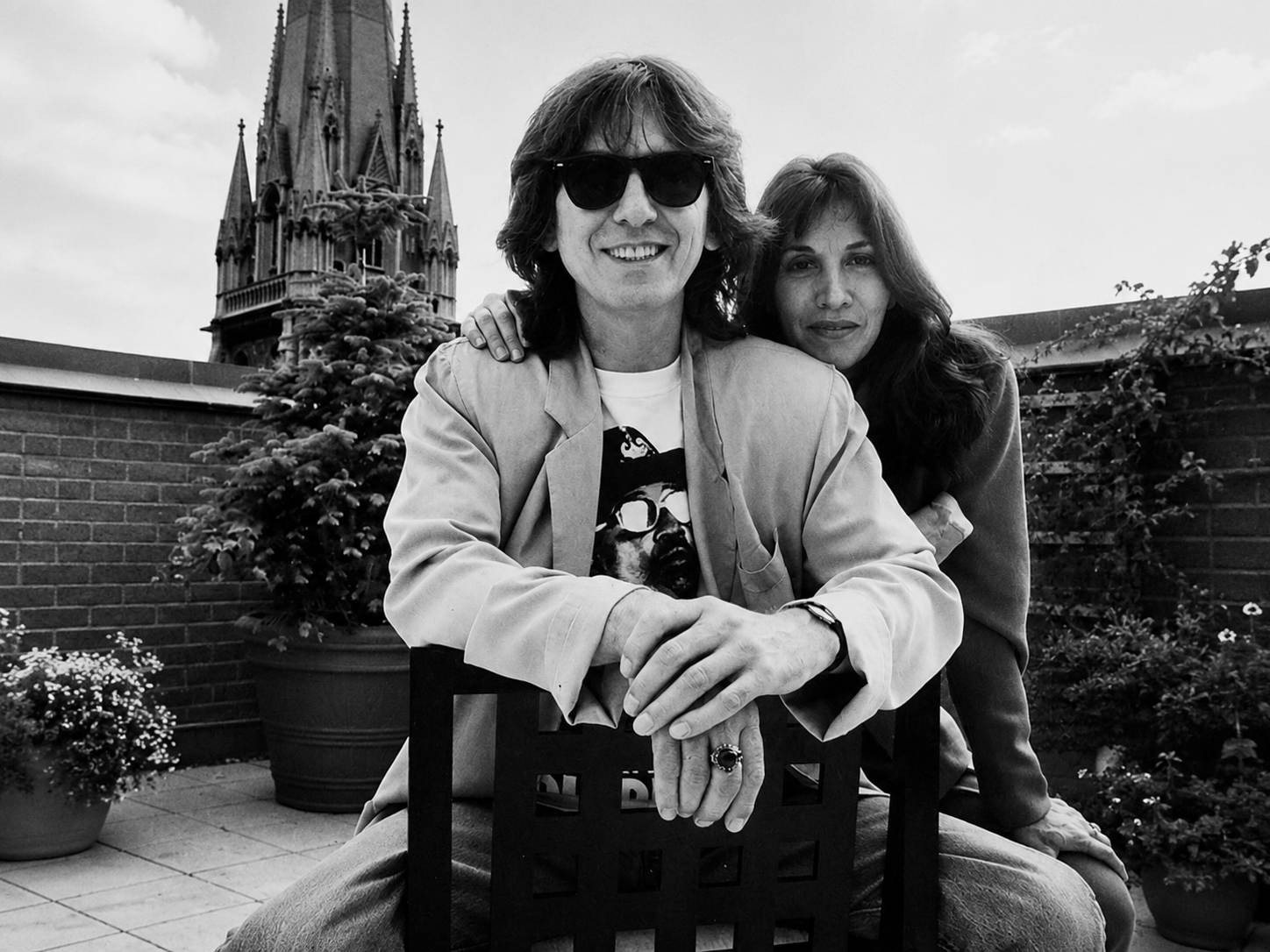
What unfolded next became one of the most remarkable and intimate chapters in the Harrison family story. Hearing the struggle, Olivia Harrison didn’t hesitate. Armed with nothing but a fireplace poker and a heavy lamp, she confronted the attacker, putting her own safety on the line to protect her husband. Years later, George would openly acknowledge that her bravery had saved his life. Behind the public image of a global music legend was a marriage rooted in unwavering devotion, loyalty, and the courage to stand for one another when it mattered most. In a single night, the world saw that love’s truest expression is often revealed not in grand gestures, but in decisive, selfless action.
Many might have emerged from such a life-threatening ordeal consumed by fear, anger, or bitterness. George responded in a way that shocked and inspired all who knew him. During interviews after his recovery, he spoke of the attacker with a calm, almost disarming lack of rancor. At one point, he even joked, “The guy was more upset than I was.” Beneath the humor lay the deeper truth: decades of spiritual study, meditation, and a steadfast belief in compassion over resentment had shaped a man who could face unimaginable violence and still choose empathy over vengeance. The night at Friar Park challenged those teachings in the most brutal way imaginable, yet instead of abandoning them, George embraced them even more firmly.
Friends who visited him during recovery often remarked on his extraordinary resilience. Though physically weakened and still bearing the marks of the attack, George returned to the life that had always grounded him—music, gardening, family, and quiet reflection. Olivia later reflected that the experience seemed to deepen his appreciation for life rather than harden his heart. The ordeal, terrifying as it was, revealed the profound layers of kindness, patience, and understanding woven into his character, reminding everyone that true strength often resides in gentleness.
More than two decades later, this story continues to resonate not merely as a tale of survival, but as a portrait of a man who refused to let violence define him. When faced with fear, he responded with grace. When confronted with cruelty, he chose forgiveness. Long before he composed My Sweet Lord or All Things Must Pass, George had spent a lifetime seeking deeper truths. And on that winter night at Friar Park, the world witnessed one of those truths brought vividly to life—not through music, not through fame, but through the quiet, unwavering strength of a man whose compassion proved far more powerful than the pain inflicted upon him.