There are famous singers… and then there is Elvis Presley.
There are famous singers, and then there is Elvis Presley. More than four decades after his passing, the name Elvis still carries a power few artists in history have ever achieved. His voice, his style, his stage presence, and his emotional connection with audiences transformed not only music, but global culture itself. Elvis Presley was not simply a performer. He became a revolution. Even in 2026, millions of people across generations continue listening to his songs because his music carries something timeless: real emotion, vulnerability, passion, and soul. Long before social media and modern celebrity culture existed, Elvis created a level of fame the world had never seen before, becoming the blueprint for every global superstar who followed after him.
Born on January 8, 1935, in Tupelo, Mississippi, Elvis Aaron Presley grew up in poverty inside a small working class family. His childhood was far from glamorous. He was raised surrounded by gospel music in church, country music on the radio, and rhythm and blues influences flowing throughout the American South. Those sounds deeply shaped him from an early age. While many people later viewed Elvis as larger than life, those who knew him during childhood often described him as shy, quiet, respectful, and deeply connected to music. Few could have imagined that this humble young boy would someday become the most recognizable entertainer on Earth. Yet even during his teenage years, Elvis possessed something special that could not be taught: emotional authenticity. When he sang, people believed him.
Everything changed in 1954 when Elvis walked into Sun Studio in Memphis, Tennessee. The famous recording studio, led by producer Sam Phillips, was searching for new talent and fresh sounds. During one legendary session, Elvis casually began singing “That’s All Right” alongside musicians Scotty Moore and Bill Black. What emerged from that room sounded completely different from anything popular at the time. Elvis blended country music with rhythm and blues in a raw, emotional, energetic way audiences had never experienced before. Sam Phillips reportedly knew immediately that he had discovered something extraordinary. Within a short time, Elvis Presley became impossible to ignore.
As his music spread across radio stations, young audiences became obsessed with him almost overnight. Teenagers screamed uncontrollably at concerts. Fans cried, fainted, and chased him everywhere he went. Television appearances sparked controversy across America because older generations considered his dancing and stage movements too provocative for national audiences. But the more critics attacked Elvis, the more young people connected with him. He represented freedom, rebellion, excitement, and emotional honesty. Songs like “Heartbreak Hotel,” “Hound Dog,” “Blue Suede Shoes,” “Love Me Tender,” and “Don’t Be Cruel” turned Elvis into the face of an entirely new generation. For the first time in history, modern celebrity culture truly exploded around a music artist.
But Elvis Presley was far more than a controversial rock and roll star. What made him unforgettable was the emotional depth inside his voice. He could perform explosive rock songs filled with energy one moment and then sing heartbreaking ballads with incredible tenderness the next. Whether performing gospel, country, blues, or romantic love songs, Elvis made listeners feel every word. Songs like “Can’t Help Falling In Love,” “Suspicious Minds,” “If I Can Dream,” and “In The Ghetto” revealed a deeper, more emotional side that proved his artistry went far beyond simple entertainment. His voice carried vulnerability, loneliness, passion, longing, and humanity in a way few singers have ever matched.
As his fame grew larger, so did the pressure surrounding his life. Endless touring schedules, Hollywood film contracts, public expectations, and worldwide attention slowly consumed enormous amounts of his emotional and physical energy. The world constantly demanded more from Elvis Presley, while very few people truly understood the pressure of carrying that identity every day. Behind the glamorous image was a sensitive man quietly battling exhaustion and loneliness. Yet despite the struggles he faced privately, Elvis continued giving everything he had to audiences because music remained the center of his life.
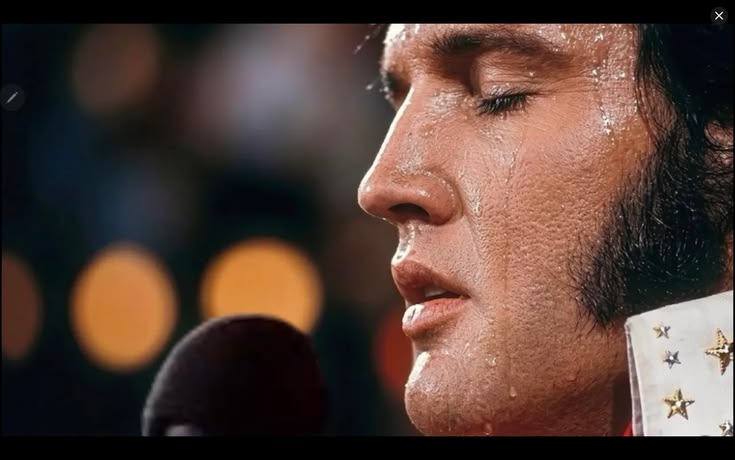
By the late 1960s, some critics believed Elvis’s greatest years were behind him. But in 1968, he shocked the world with one of the greatest comebacks in entertainment history. The famous “1968 Comeback Special” reminded audiences exactly why Elvis Presley was still The King of Rock and Roll. Dressed in black leather and performing with raw emotional intensity before a live audience, Elvis looked completely reborn. The performance felt authentic, fearless, and deeply personal. Songs like “If I Can Dream” carried emotional power so strong that many fans still consider the special one of the greatest live performances ever recorded. It was not simply a comeback. It was proof that Elvis Presley’s connection to music remained genuine until the very end.
Following the comeback, Elvis entered another legendary chapter through his Las Vegas performances. Thousands of fans filled theaters night after night hoping to witness him perform live. Wearing iconic jumpsuits and commanding stages with unmatched charisma, Elvis became larger than life itself. Yet even during those years, people closest to him increasingly noticed signs of emotional exhaustion behind the scenes. The man who gave millions of people happiness was quietly carrying enormous pain himself. And perhaps that hidden sadness is one reason audiences continue connecting to Elvis so deeply decades later.
When Elvis Presley passed away on August 16, 1977, the world reacted with shock unlike anything seen before for an entertainer. Millions mourned across the globe. Fans gathered outside Graceland crying openly. Newspapers described his death as the end of an era. But somehow, Elvis Presley never truly disappeared. His music continued reaching new generations. Young listeners discovered his voice decades later and still felt the same emotional connection audiences experienced during the 1950s. Artists across multiple generations openly admitted Elvis inspired their own careers. Without Elvis Presley, modern popular music itself might never have evolved the same way.
Even today in 2026, Elvis remains one of the most streamed, discussed, and celebrated artists in music history. Graceland continues attracting visitors from around the world. His songs still play across radio stations, documentaries, films, and social media tributes. Because Elvis Presley became more than a singer. He became timeless. His story is not only about fame or success. It is about passion, vulnerability, sacrifice, and the extraordinary power music has to connect human beings emotionally across generations.
The world has seen countless stars since Elvis Presley. But only one became The King. ❤️
Read More Emotional Elvis Presley Stories On Our Website And Discover The Untold Truth Behind The King’s Life, Music, Love, And Legacy That Still Touches Millions Of Hearts Today ❤️