For generations of movie lovers, John Wayne was never just an actor. He represented strength, honor, resilience, and the spirit of old America itself. With his towering presence, unforgettable voice, and legendary performances in classic Western films, Wayne became one of the most recognizable faces in Hollywood history. To millions around the world, he was simply “The Duke,” the cowboy who never backed down and the hero who always stood tall in the face of danger.
But behind the myth was a man quietly fighting a painful and heartbreaking battle that few people truly understood.
In the final years of his life, John Wayne was suffering physically in ways the public rarely saw. Decades of heavy smoking had severely damaged his health, and by the 1960s, he had already survived lung cancer after doctors removed an entire lung and several ribs. Most people believed such a devastating surgery would end his career forever. Instead, Wayne shocked Hollywood by returning to the screen, determined not to let illness define him.
Yet the years that followed became increasingly difficult. His body weakened. His breathing became harder. In 1978, he underwent open heart surgery. Soon after, more devastating news arrived. Cancer had returned, this time spreading aggressively through his stomach and intestines. Despite the unbearable pain, Wayne continued facing the public with dignity and remarkable courage.
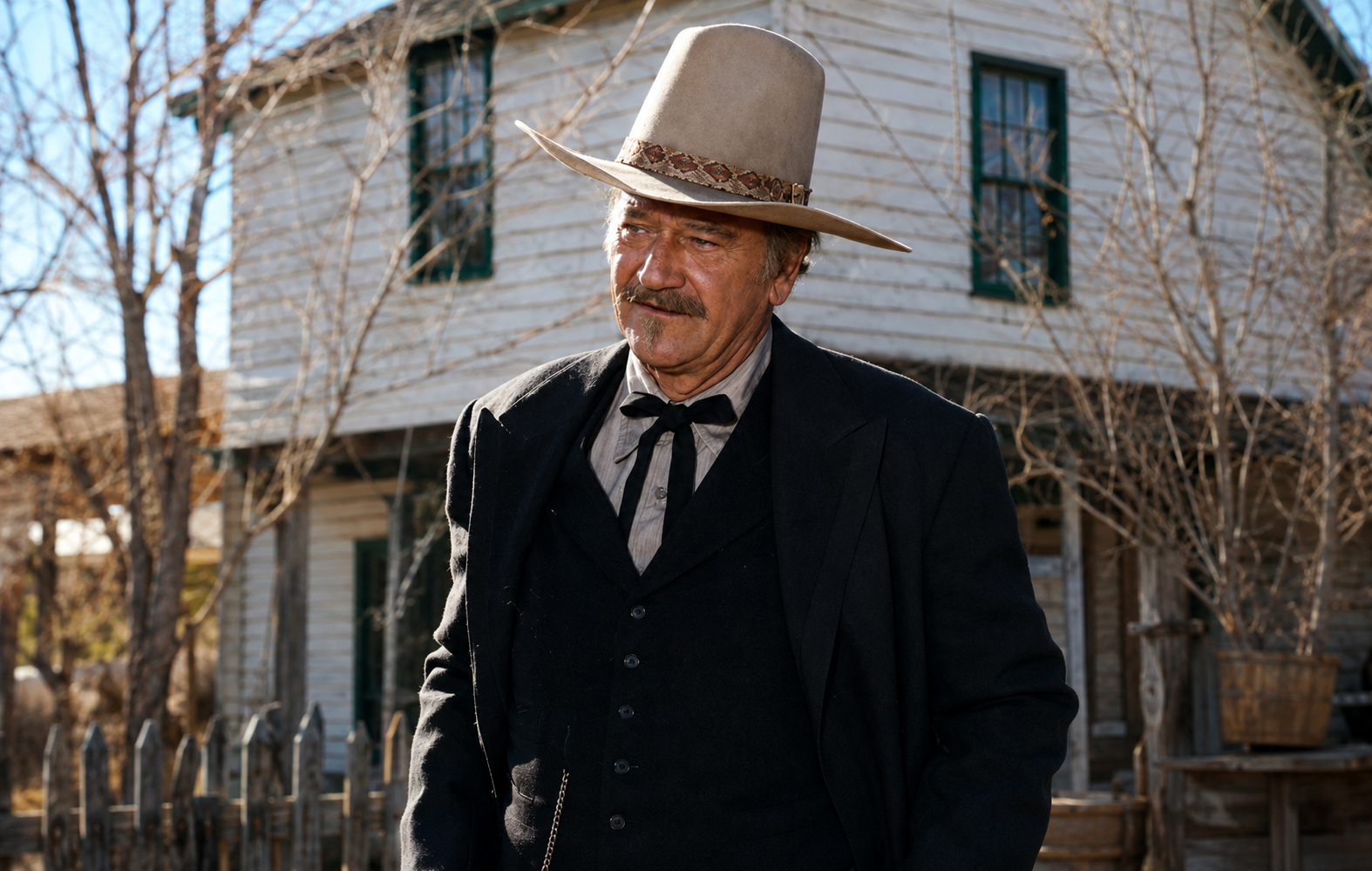
One of the most emotional moments of his career came with his final film, The Shootist, released in 1976. The movie now feels almost haunting to watch. Wayne played an aging gunfighter dying from cancer while struggling to maintain his dignity in a changing world. The parallels between the character and Wayne’s real life were impossible to ignore. Audiences realized they were not simply watching a performance. They were watching a legendary man confronting his own mortality in front of the entire world.
There is something deeply moving about the quiet honesty Wayne brought to that role. Gone was the invincible cowboy image that had defined him for decades. In its place stood an older man filled with pain, fear, wisdom, and acceptance. Many critics now consider The Shootist one of the greatest farewell performances ever given by an actor because it felt painfully real.
Even as his health rapidly declined, John Wayne refused to disappear quietly.
On April 9, 1979, only weeks before his death, Wayne made what would become his final public appearance at the Academy Awards. By then, cancer had visibly weakened him. The once powerful figure had become noticeably thin and fragile. Yet when he walked onto the stage to present the Oscar for Best Picture, something extraordinary happened.
The audience immediately rose to its feet.
For nearly a minute, Hollywood applauded the man who had shaped American cinema for more than fifty years. It was not just applause for a movie star. It was a farewell filled with gratitude, admiration, and heartbreak. Wayne, visibly emotional, smiled through the standing ovation and delivered a line that many fans still remember today:
“That’s just about the only medicine a fellow would ever really need.”
Those words carried even more weight knowing how sick he truly was.
Behind the scenes, John Wayne spent his final months focusing on the people who mattered most to him. Family became more important than fame. Friends described him as reflective, emotional, and determined to make peace with life. In many ways, the man known for playing fearless heroes finally allowed the world to see his humanity.
On June 11, 1979, John Wayne passed away at the age of 72 in Los Angeles. The news devastated fans across the globe. America had not simply lost an actor. It had lost a symbol of an entire generation of filmmaking and storytelling.
Yet even decades later, Wayne’s legacy continues to live on.
Classic films like True Grit, The Searchers, Rio Bravo, and Stagecoach still inspire audiences today. Younger generations continue discovering the timeless appeal of the rugged cowboy whose screen presence could command attention without needing flashy effects or modern spectacle.
More importantly, many people remember the courage he showed during the darkest chapter of his life. John Wayne faced death not as an untouchable Hollywood legend, but as a human being trying to hold onto dignity, strength, and love until the very end.
And perhaps that is why the world still remembers him so deeply.
Because behind the cowboy hat and legendary walk was a man who fought bravely until his final breath.