From the outside, Kinfauns seemed almost like a dream. Nestled in Esher, Surrey, George Harrison’s bungalow radiated a surreal energy that captured the spirit of the late 1960s. The walls were alive with color, the air heavy with the sweet haze of incense, and music floated gently from room to room. It was here, in this vivid sanctuary, that The Beatles gathered in 1968 to record the Esher demos—sessions that would become the foundation for the legendary White Album. Creativity poured from every corner, unrestricted and exhilarating. But behind the laughter, the music, and the artistic breakthroughs, a quieter, more subtle story was unfolding.
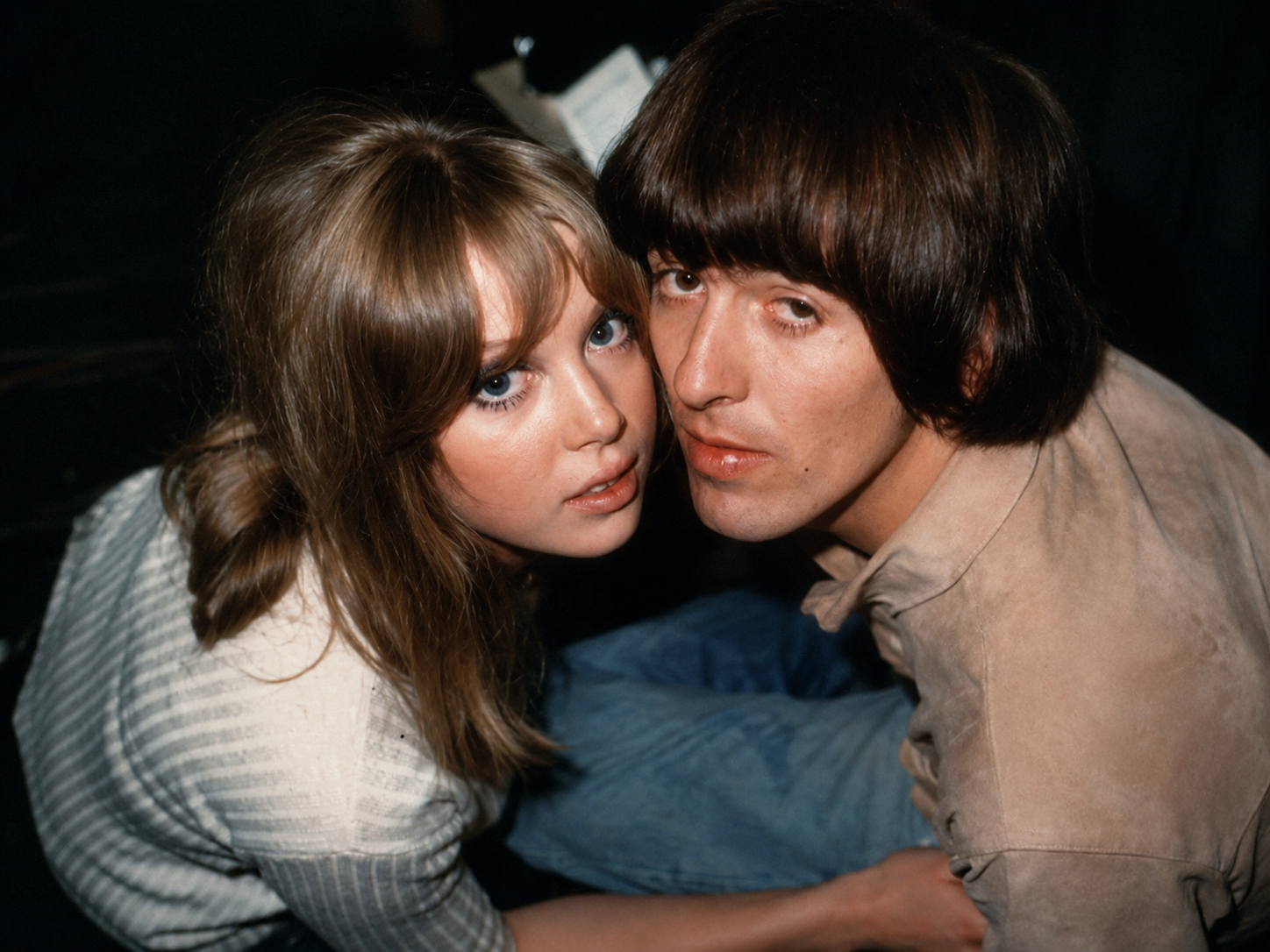
For Pattie Boyd, George’s wife, Kinfauns was both a refuge and a revelation. It was a place that held joy, freedom, and artistic energy, but it was also where the seeds of distance began to take root. Pattie had once guided George into meditation, helping him explore Eastern spirituality and reshaping both his music and his inner life. Yet as George delved deeper into long hours of silence, chanting, and contemplation, a gentle but perceptible drift began—first subtle, then undeniable. The bond that had once seemed inseparable began to stretch. The same rooms that had witnessed connection now echoed with quiet separation. Kinfauns remained beautiful, but it no longer felt entirely like home.
The isolation wasn’t only emotional. Kinfauns’ location, hidden behind dense trees and protective walls, shielded its inhabitants from the intrusive gaze of fame. But this seclusion, while safeguarding creativity, also reinforced the emotional distance. George disappeared further into his music, his meditations, and his inner world, leaving Pattie surrounded by the space and beauty they had once shared. Their private sanctuary slowly became a house of quiet longing. Even the outside world intruded at times—like the 1969 police raid that shattered what calm remained, leaving a cold, hard reminder that no space could fully insulate them from the chaos beyond.
Kinfauns was more than just a historic site in Beatles lore. It became a stage for the intimate tensions and profound shifts in George and Pattie’s lives. It was a snapshot frozen between two directions: one reaching skyward, seeking transcendence and meaning beyond the world, and the other rooted on the ground, yearning to preserve the love and human connection that already existed. On the surface, the house was a riot of color, music, and possibility. Beneath that surface, it was a subtle portrait of hearts slowly drifting apart, a quiet separation marked not by words or arguments, but by the gentle weight of absence and the lingering echo of what once was.
Kinfauns reminds us that the White Album was not created in a vacuum. It was born from a complex tapestry of artistry, love, solitude, and emotional evolution. Within those walls, George Harrison expanded his musical vision while navigating the intimate, often unspoken challenges of love and partnership. Pattie Boyd’s perspective, her silent observations and emotional presence, are as much a part of that story as the music itself. Together, they illustrate the delicate balance between creation and personal life, a balance that defines the human side of legends.
Ultimately, the story of Kinfauns is about contrast—the vibrant and the quiet, the ecstatic and the solitary, the love that inspires and the distance that challenges. It’s a rare glimpse behind the curtain of one of the greatest bands in history, showing that even amidst the chaos of genius and fame, human emotions persist in their quiet, complicated, and often heartbreaking glory.