By 1978, George Harrison had already lived more lives than most musicians could dream of in several lifetimes. The youngest Beatle, the quiet one, the man who introduced the sitar to Western pop, had survived the chaos of Beatlemania, the acrimonious breakup of The Beatles, and had established himself as a formidable solo artist. Yet beyond the music, life was still testing him, and he was about to step into one of the boldest, most selfless acts of generosity in entertainment history.
Monty Python, Harrison’s favorite comedy troupe, was on the brink of disaster. Their ambitious, fearless biblical satire Life of Brian had just lost its funding from EMI Films, mere days before filming was scheduled to begin in Tunisia. The cast, crew, costumes, and meticulously constructed sets were ready—but the money wasn’t. The film was effectively dead. Unless George Harrison intervened.
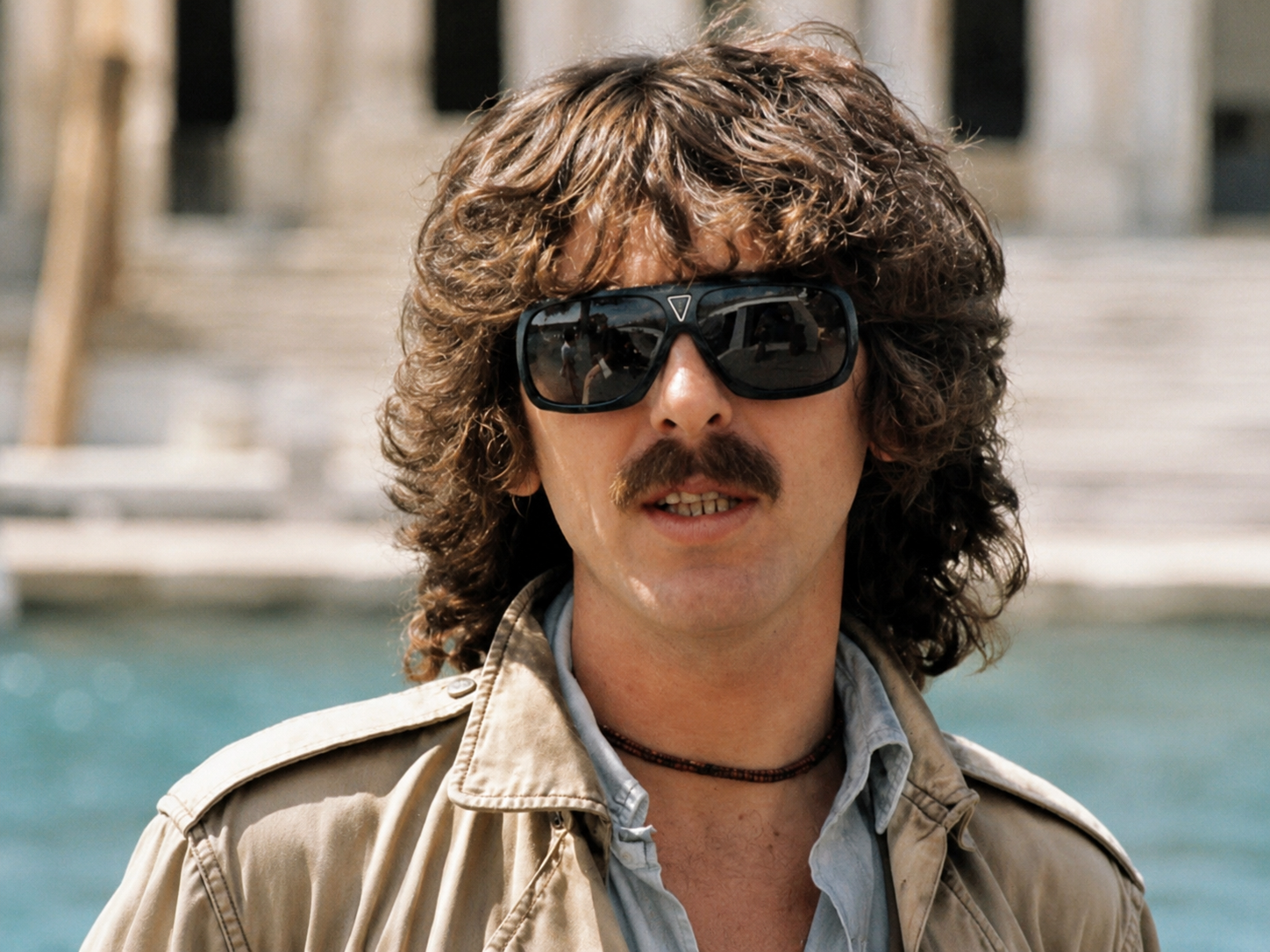
And intervene he did. Harrison, a devoted fan, answered Eric Idle’s desperate call without hesitation. In a single, decisive move, he offered the full $4 million necessary to fund the film—a personal investment that represented nearly everything he had. But he didn’t stop there. Harrison pledged his beloved Friar Park mansion as collateral, putting his home and financial security at stake to ensure the Pythons could bring their vision to life.
Why? Because Harrison believed in art. Because Monty Python’s anarchic, fearless humor had kept him grounded during the chaotic post-Beatles years. And, most simply, because he wanted the movie to exist. This wasn’t a calculated business move—it was a deeply personal act of faith in creativity, friendship, and the power of laughter.
Filming began on September 16, 1978. Harrison made a small, understated cameo, but otherwise stepped back, allowing the Pythons to work without interference. When Life of Brian premiered in 1979, it faced protests, censorship, and accusations of blasphemy. Over 40 local councils in the UK banned it outright, and several countries refused to screen it. Yet audiences flocked to see it, and the film became a cornerstone of British comedy. The $4 million investment returned $21 million worldwide, a staggering vindication of Harrison’s faith. Eric Idle famously remarked it was “the most anyone’s ever paid for a cinema ticket in history”—and Harrison, true to his modest nature, didn’t correct him.
But Harrison’s influence didn’t end there. He co-founded HandMade Films to produce Life of Brian, and the company went on to rescue and produce 23 more iconic British films over the next decade, including The Long Good Friday, Time Bandits, and Withnail and I. One Beatle’s quiet, selfless commitment to friends and art changed the course of cinema history forever.
George Harrison passed away in 2001 at the age of 58. Yet stories like this reveal the man beyond the music: a visionary who acted out of genuine generosity, who risked everything for friends, creativity, and belief in a project that wasn’t guaranteed to succeed. His legacy wasn’t just in his songs, but in courage, humility, and an unwavering dedication to what he felt was right.
This story reminds us that true generosity is measured not by convenience or recognition, but by sacrifice. In 1978, George Harrison bet his home, his money, and his security—all for a film he might never see completed, for friends he loved, and for the art he believed in. 🎸💛