When looking back at the final period of John Lennon’s life in 1980, Beatles fans often wonder: what were George Harrison’s last words to his old friend? The historical truth is bittersweet—there was no direct conversation, no farewell exchanged in person between the two. During John Lennon’s final months, the relationship between him and George had quietly drifted into tension. John felt hurt and disappointed that George barely mentioned him in his 1980 autobiography, I Me Mine. This unspoken rift left a lingering emotional gap between them, and John’s sudden death at the hands of an assassin tragically eliminated any chance for reconciliation.
For George, this loss was profoundly personal. Yet his response was marked not by anger or regret, but by a calm, philosophical acceptance. Deeply influenced by Eastern spirituality and Indian philosophy, George viewed death not as an absolute end but as a natural transition of the soul. He believed that while the physical form disappears, the essence of a person—what he often described as the soul—remains. George’s reflections on John highlighted a remarkable inner strength: he could honor his friend’s spirit without being trapped in grief.
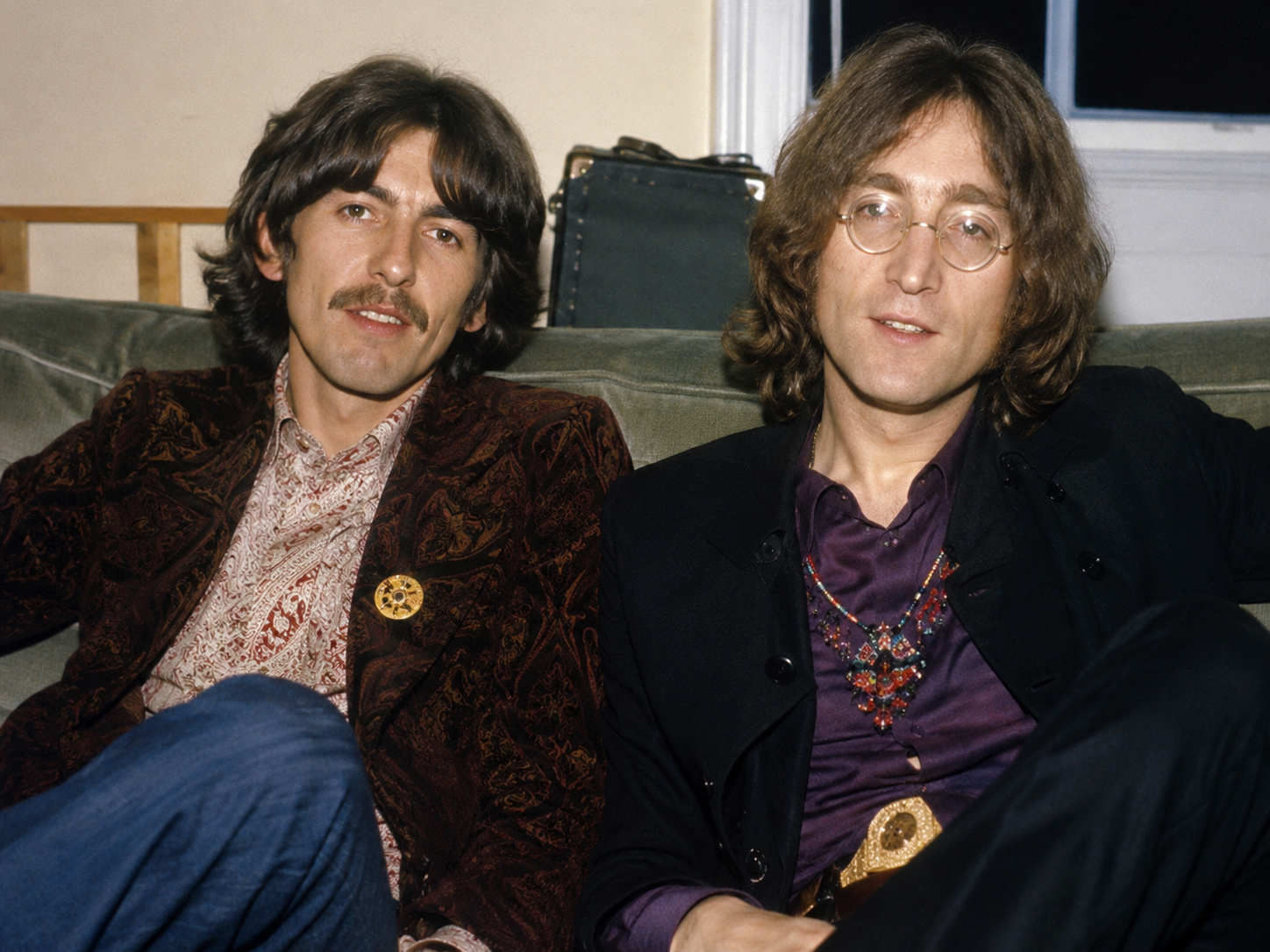
Unable to speak his farewell directly, George found a way to communicate through music. In 1981, he released All Those Years Ago, a poignant tribute to John Lennon that captured the complexity of grief, admiration, and friendship. The song was more than just a homage; it was George’s way of encapsulating decades of shared memories, laughter, and music. It also symbolized the continuity of the Beatles’ bond, as Paul McCartney and Ringo Starr contributed to the track, turning it into a collective farewell from the remaining band members.
The creation of All Those Years Ago demonstrates George’s unique ability to merge personal emotion with musical artistry. Every note and lyric carries layers of meaning—an acknowledgment of John’s talent, his commitment to peace, and his extraordinary humanity. Beyond a musical tribute, it became a historic moment for Beatles fans: a rare, authentic expression of the private grief and love that the public rarely witnessed.
George’s approach to this tragic moment also reflects his broader philosophy of life. Throughout his later years, he often spoke about impermanence and the transient nature of human existence. He accepted that physical separation was inevitable but believed that the impact one leaves behind—through music, love, and shared memories—transcends death. His calm and thoughtful reaction to John’s passing is a testament to his emotional maturity and spiritual grounding.
For the surviving members of the Beatles, John’s death marked a deep personal loss. Paul McCartney and Ringo Starr had lost not just a bandmate, but a lifelong friend. Yet through All Those Years Ago, the three remaining members were able to transform their grief into a public yet profoundly intimate statement of remembrance. Fans were given a glimpse into the private emotional world of the Beatles—a world shaped not only by fame and music but by friendship, loyalty, and the enduring power of love.
Ultimately, George Harrison’s tribute reminds us that true connection can exist beyond words. Even when circumstances prevent a final conversation, love, respect, and shared history can be expressed in other forms—especially through art. All Those Years Ago stands as a testament to George’s enduring integrity, emotional depth, and the profound bond he shared with John Lennon, immortalized not just in memory, but in song.
Through this story, fans are reminded that while history records the Beatles as icons of music, the heart of their legacy lies in human connection: friendship, empathy, and the courage to honor loved ones even after they’re gone. George Harrison’s tribute continues to resonate, a quiet yet powerful echo of a friendship that shaped the world and the hearts of millions.