On that poignant June evening in 1979, when the final breath of John Wayne faded into the ether, the United States lost vastly more than a successful actor. It lost a foundational, mythic pillar of its twentieth century cultural identity. Decades later, the legacy "The Duke" left behind remains a vast, multifaceted tapestry, encompassing unparalleled cinematic history, deeply ingrained cultural mythology, and enduring, life saving philanthropy.
1. A Cinematic Titan and the Archetype of the Hero
John Wayne’s filmography stands as a staggering, monolithic monument to Hollywood’s Golden Age, representing a career that defined American cinema for half a century. Starring in over 170 films across a full fifty years, he maintained a dominant, bankable box office draw for three uninterrupted decades. This extraordinary feat of longevity is rarely matched in the history of the medium, cementing his status as a permanent fixture in the global cultural landscape.
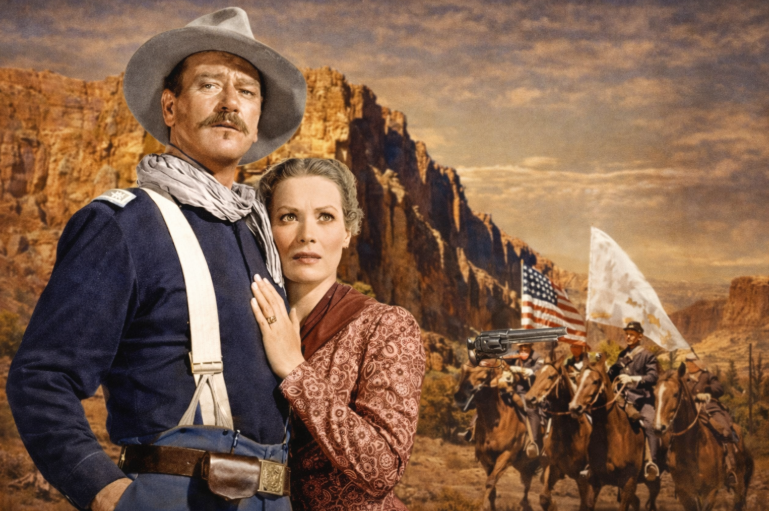
This monumental success was deeply anchored by his historic collaboration with director John Ford. Together, they fundamentally elevated the Western genre from disposable, low budget B movies into profound, sweeping cinematic explorations of American history, morality, and character. Their creative partnership bore fruit early on with the 1939 masterpiece Stagecoach, which propelled Wayne from obscurity to mainstream stardom as the Ringo Kid, forever redefining the Western genre for a global audience.
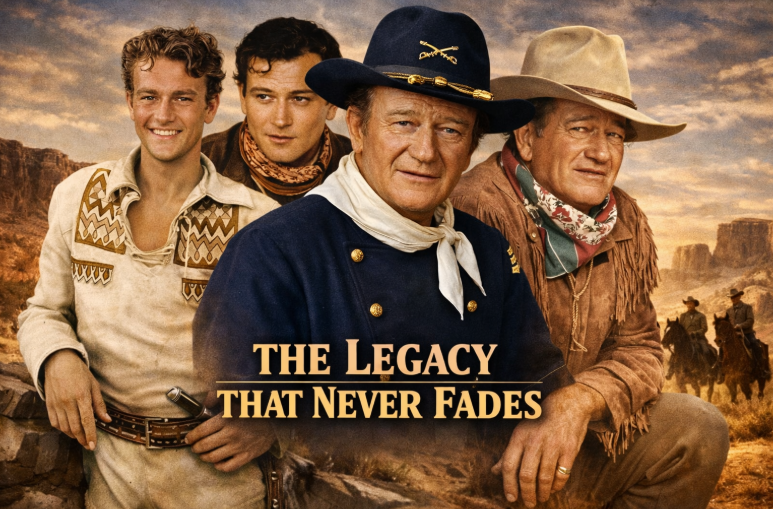
As Wayne matured as an actor, his roles grew increasingly profound, allowing him to explore the darker, more complex facets of the human condition. This artistic evolution culminated in the 1956 film The Searchers, a masterpiece universally cited by directors and critics as one of the greatest films ever made, where Wayne delivered a morally complex performance as an obsessive antihero. He later demonstrated his incredible range in 1969 with True Grit, winning his first and only Academy Award for Best Actor for his highly self aware, comedic, yet gritty portrayal of the cantankerous, one eyed Marshal Rooster Cobburn. His cinematic journey came to a deeply poignant conclusion with his final role in the 1976 film The Shootist, where he gave a masterfully self reflexive performance as a dying gunfighter, a narrative that directly mirrored his own real life battle with terminal cancer.
Through this unparalleled body of work, Wayne’s influence on the craft of acting, and specifically on the archetype of the American hero, became absolutely immeasurable. While modern acting techniques lean heavily on the internal, emotional realism pioneered by Marlon Brando and the Method school, Wayne’s highly externalized style remained distinctly unique. Rooted in immense physical presence, terse, unwavering authority, and absolute moral conviction, his screen presence became the foundational gold standard for action stars and cinematic heroes for generations to follow. Recognizing this timeless and unparalleled impact, the American Film Institute rightfully recognized him as one of the greatest male stars of classic American cinema, ensuring that his image as the ultimate screen hero would endure forever.
2. The Ultimate Patriot and Institutional Legacy
Beyond the flickering lights of the silver screen, John Wayne was far more than a man playing a part; to millions of Americans, he was the living, breathing embodiment of the nation’s soul. He carried the weight of the frontier heritage on his broad shoulders, projecting a steadfast belief in liberty, rugged individualism, and the quiet strength that builds nations. Yet, his patriotism was never a hollow marketing tool or a safe Hollywood persona. It was a deeply personal, fiercely burning devotion that drove him to step directly into the line of fire for the country he loved.
During World War II, when he was unable to enlist due to his age and family status, a profound sense of guilt and duty consumed him. He channeled this restless energy into a tireless mission to serve those who fought on the front lines. Wayne risked his own safety to travel to the rugged, war torn terrains of the South Pacific, refusing luxury and choosing instead to walk among the muddy trenches, shaking the hands of lonely young soldiers and listening to their fears. Decades later, as the country fractured under the heavy political weight of the Vietnam War, he refused to abandon the troops. He traveled to the dangerous jungles of Southeast Asia once again, putting his life on the line just to look into the eyes of young Americans and remind them that they were not forgotten. To those soldiers, he was not a distant movie star; he was a piece of home, a symbol of unyielding support when the rest of the world seemed to turn its back.
This lifetime of quiet sacrifice, unwavering loyalty, and profound devotion to the American spirit did not go unnoticed by the republic he championed. In the twilight of his life, as he faced his final days, the United States Congress struck a special gold medal in his honor, bearing an inscription that perfectly captured his essence: "John Wayne, American." Shortly after his passing, in 1980, he was posthumously awarded the Presidential Medal of Freedom, the highest civilian honor the nation can bestow.
Today, his institutional legacy breathes across the landscape of the country he loved so dearly, serving as a permanent reminder of a man who became an institution himself. His name welcomes millions of weary travelers as they touch down at the John Wayne Airport in Orange County, California, a place where his towering bronze statue stands as a sentinel of hospitality. Thousands of miles away, in the heart of Texas, visitors walk softly through the permanent exhibit, "John Wayne: An American Experience" in the historic Fort Worth Stockyards. There, looking at his personal letters, his scratched cowboy boots, and the tangible pieces of his life, people do not just see the relics of a Hollywood legend. They feel the enduring heartbeat of a flawed, fiercely loyal patriot who loved his country with every fiber of his being, leaving behind a legacy that time can never erode.
3. The Gravesite and the Tomorrow Inscription
Wayne’s physical resting place is as profoundly telling as the life he lived. He was buried at Pacific View Memorial Park in Corona del Mar, Newport Beach, California, a fittingly beautiful location perched atop a hill overlooking the blue waters of the Pacific Ocean, near where he spent his final, peaceful years sailing his beloved yacht, the Wild Goose.
A Heartbreaking Truth: For twenty full years following his death, the grave of one of the most famous men in the world remained completely unmarked.
His family made this difficult decision out of a deep respect for the other families resting in the cemetery, fearing that a massive influx of zealous fans or potential vandalism would result in the trampling and desecration of surrounding gravesites.
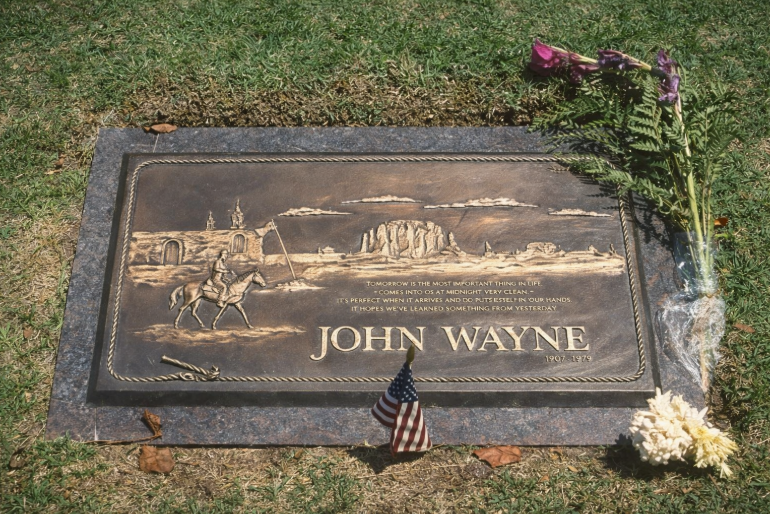
It was not until 1998 that a simple, understated bronze plaque was finally placed over his grave. The inscription chosen by his family was not a famous line of dialogue from one of his iconic Westerns, but rather a profound, highly poetic quote he had given in a 1971 interview:
"Tomorrow is the most important thing in life. Comes into us at midnight very clean. It's perfect when it arrives and it puts itself in our hands. It hopes we've learned something from yesterday."
This epitaph perfectly captures the essence of John Wayne’s final spiritual and emotional state. It is a timeless testament to the belief in personal redemption, the constant opportunity for self improvement, and the quiet, profound wisdom of a man who always looked forward to the next horizon with unyielding hope.
4. Why His Story Still Touches Hearts Today
Decades after his passing, the story of John Wayne’s final days continues to resonate deeply and emotionally with audiences around the world. This enduring fascination is rooted in the profound, universal human truths that his final chapter vividly reveals.
From Vulnerable Mortal to Undying Myth
At its absolute core, the story touches hearts because it bridges the seemingly impassable gap between the mythic and the mortal. For half a century, the public witnessed a titan of culture, a man who projected total invulnerability, confront the ultimate, terrifying vulnerability of terminal illness. Instead of hiding, he faced his severe physical decline, his massive weight loss, and his excruciating pain with a quiet, dignified grit that validated the very heroes he played on screen. The thunderous standing ovation at the 1979 Oscars was not just routine Hollywood applause, it was a collective, emotional expression of awe for a man facing certain death without flinching.
A Legacy of Family Reconciliation
Furthermore, the highly private details of his passing shatter the monolithic, often rigid caricature of the stoic, emotionally unavailable mid century patriarch. His deathbed baptism into the Catholic Church, his heartfelt, tearful apologies to his son Patrick, and his tender final words reveal a man desperate for family reconciliation, eager for spiritual peace, and overflowing with love. The image of the dying legend using his last, agonizing breaths to tell his son "I'm proud of you" strikes a massive, universal chord, speaking directly to the innate human desire for parental approval.
John Wayne’s story endures precisely because it is a master narrative of redemption and humanity. The legacy he leaves behind is uniquely dual in nature: there is the immortal celluloid hero who continues to ride across the screens of history, and there is the mortal man whose courageous, deeply vulnerable end teaches us what it truly means to face the sunset with dignity.
The Final Fight
The final hours of John Wayne effectively strip away the grand cinematic illusion to reveal a breathtaking portrait of incredible personal courage, deep paternal love, and a profound, successful search for spiritual peace. The Duke may have ridden off into the sunset on June 11, 1979, but the man, Marion Morrison, left an indelible, eternal mark on the human spirit.
His legacy is not merely preserved in the aging reels of classic Westerns, it actively lives on through the life saving, relentless work of the John Wayne Cancer Foundation, and through the timeless lessons of grit, honesty, and grace he imparted to his children.
If John Wayne's remarkable journey of physical resilience, family reconciliation, and enduring philanthropy moved you, please share this story to ensure the man behind the legend is never forgotten. Consider exploring and supporting the vital, ongoing work of the John Wayne Cancer Foundation as they continue his final, most important fight.